
2025
Coaching Tool: AI-assisted session workflow
I led workflow research and designed AI features that reduced coach context-switching and turned repetitive admin tasks into reviewable AI actions, while also generating structured data to improve our model over time.
Problem Statement
The internal coaching tool was functional, but not designed around a coach’s day (prep → session → post-session).
Coaches spent ~15 minutes per session manually triangulating user state (notes, activity, assessments).
Critical workflows required multiple tabs + external docs (e.g., Columbia risk protocol via Google Sheet).
Manual operational tasks (follow-up scheduling, content assignment) created high cognitive load and inconsistent execution.
Research approach
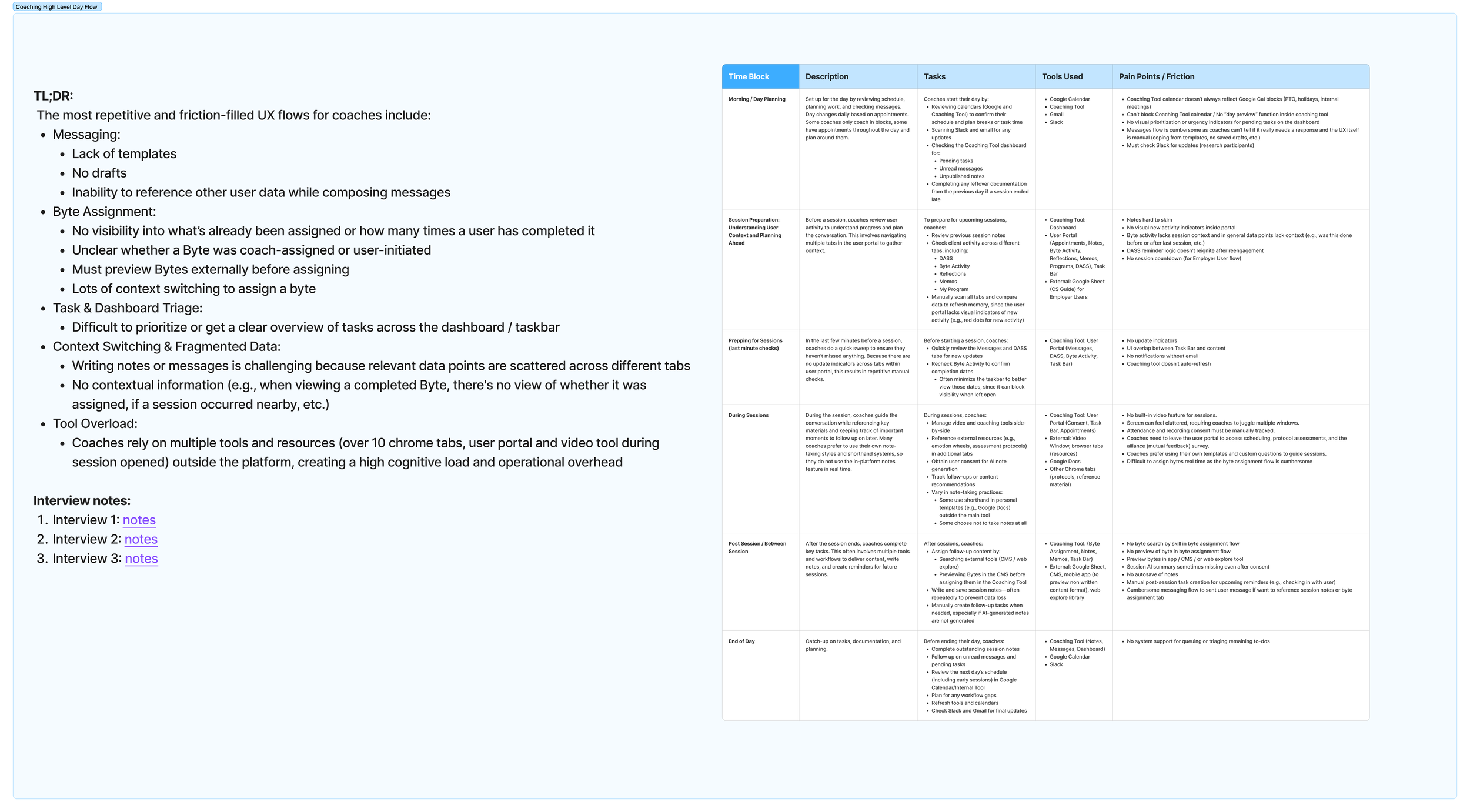
Conducted 1:1 coach interviews (1 hour each) + shadowing pre- and post-session.
Mapped the end-to-end coach day flow and identified repeat friction points.
Compared workflows by client type (D2C vs B2B vs DPC) to separate “universal pain” from segment-specific needs.
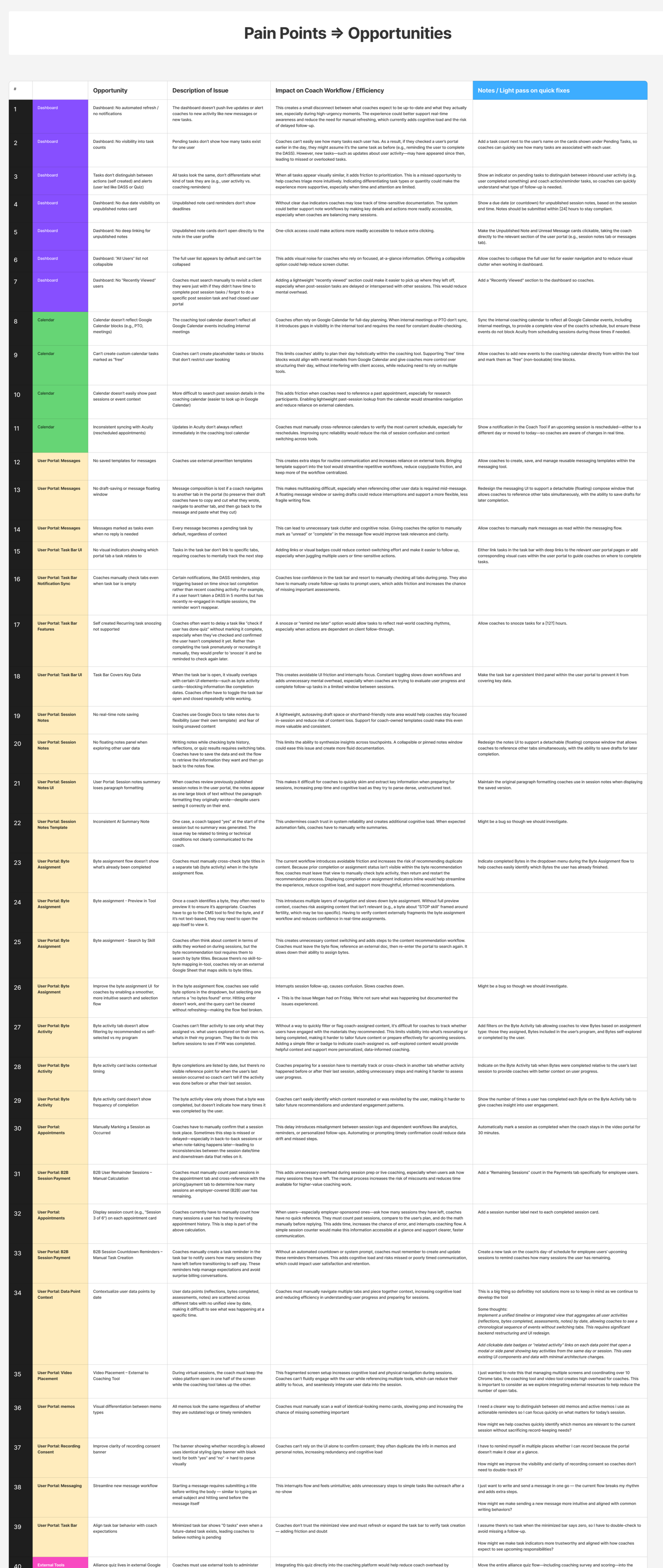
Synthesized findings into a pain points → opportunities system to prioritize highest-leverage fixes.
What I Built (ongoing)
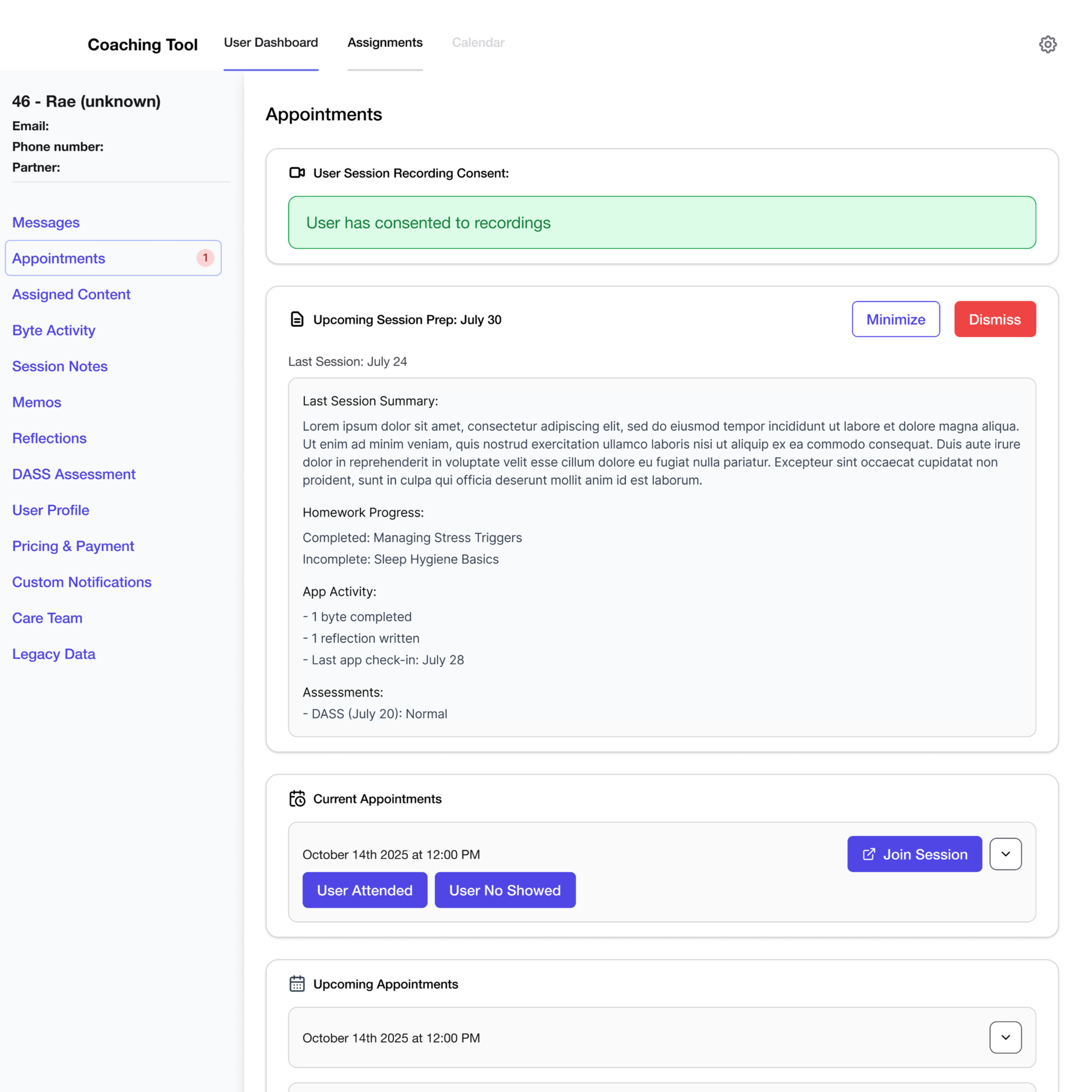
AI pre-session digest (prep compression)
Goal: replace ~15 minutes of clicking with one structured summary that mirrors how coaches actually think:
where the client left off
what changed since last session
what’s most relevant today (activity, assessments, reflections, homework)
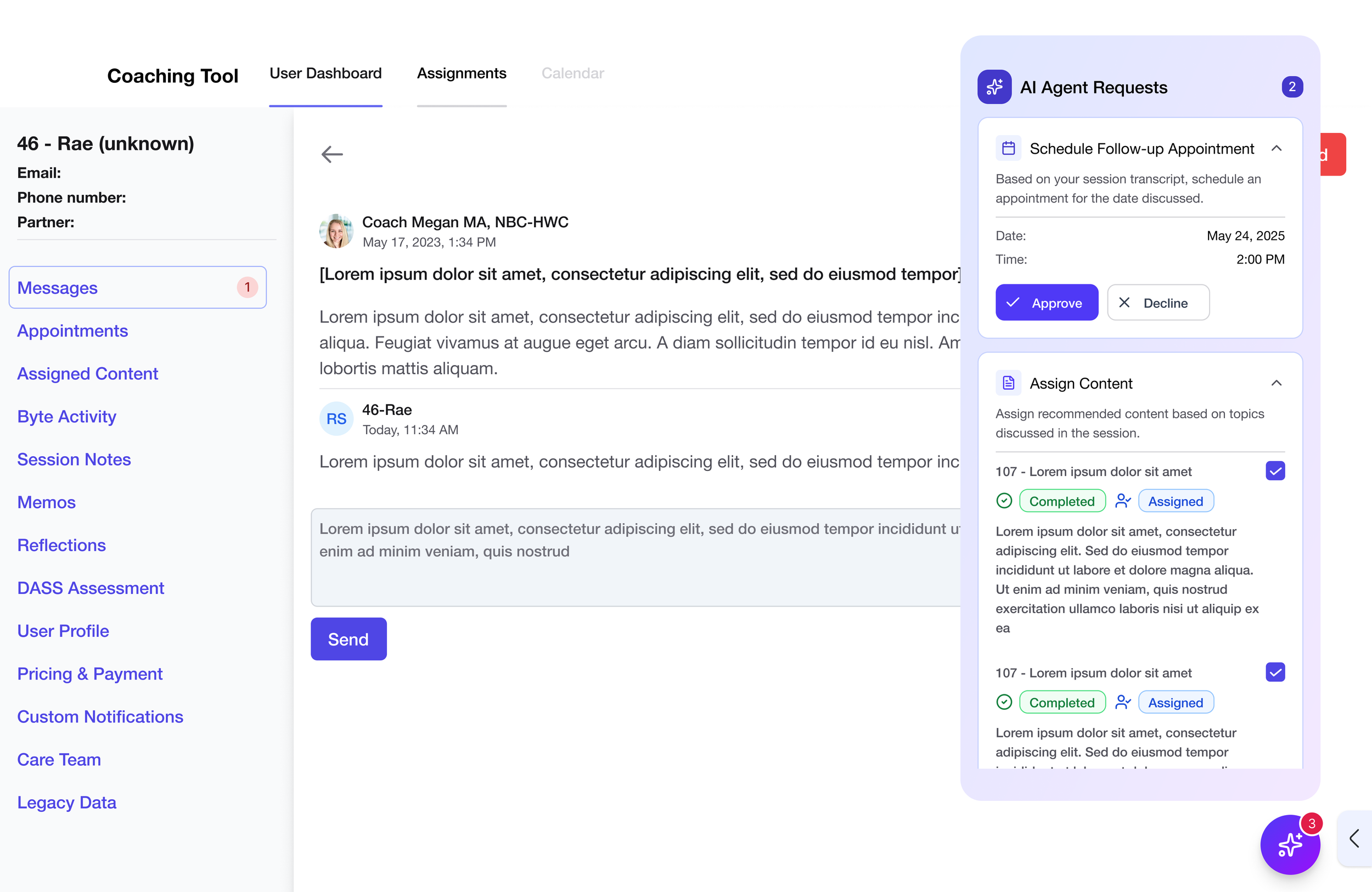
Post-session AI Agent Requests (human-in-the-loop automation)
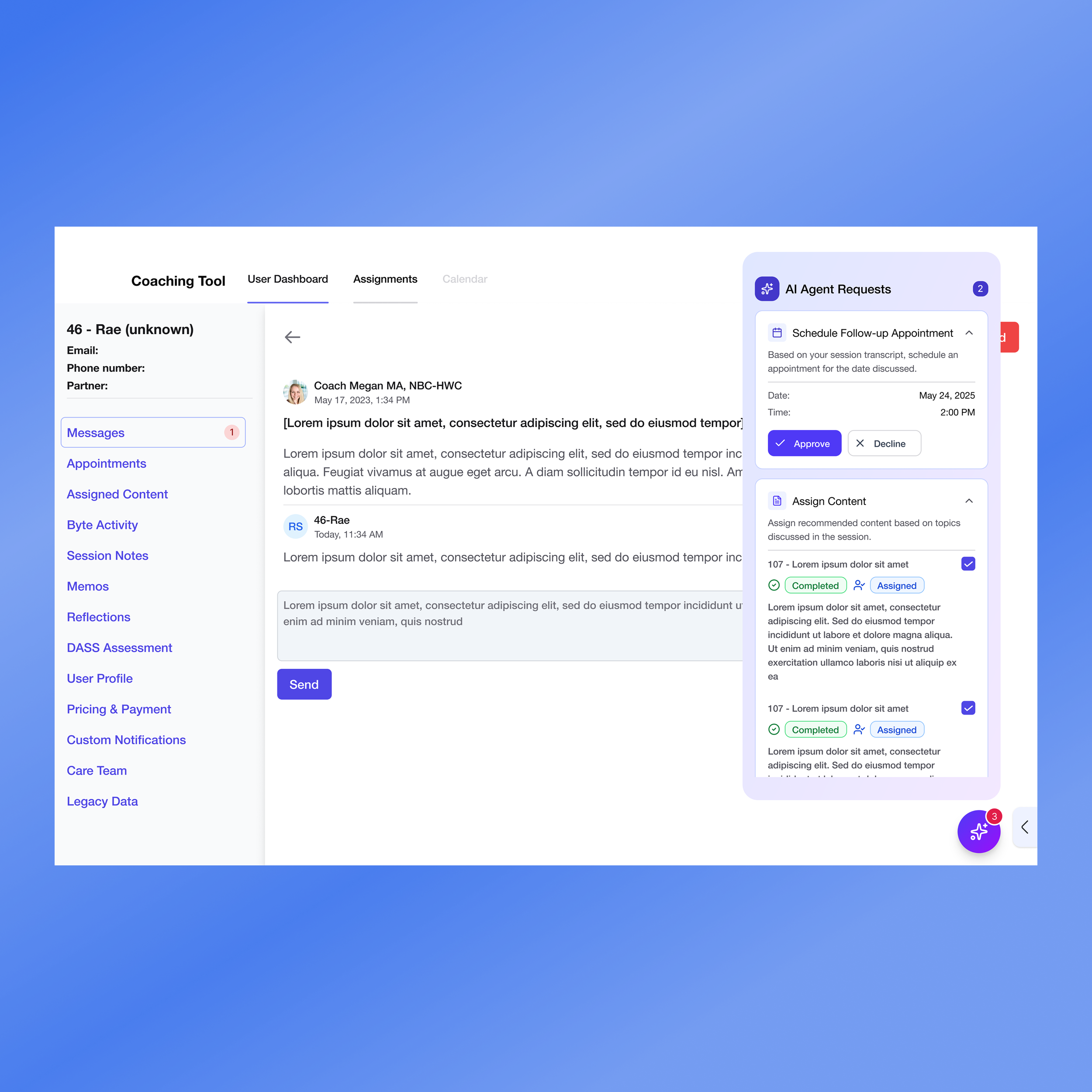
Designed an “AI proposes → coach approves/declines” layer for:
scheduling follow-up appointments
suggesting content assignments based on the session transcript
This creates a feedback loop: coach decisions become training signals while keeping control with the human during early reliability.
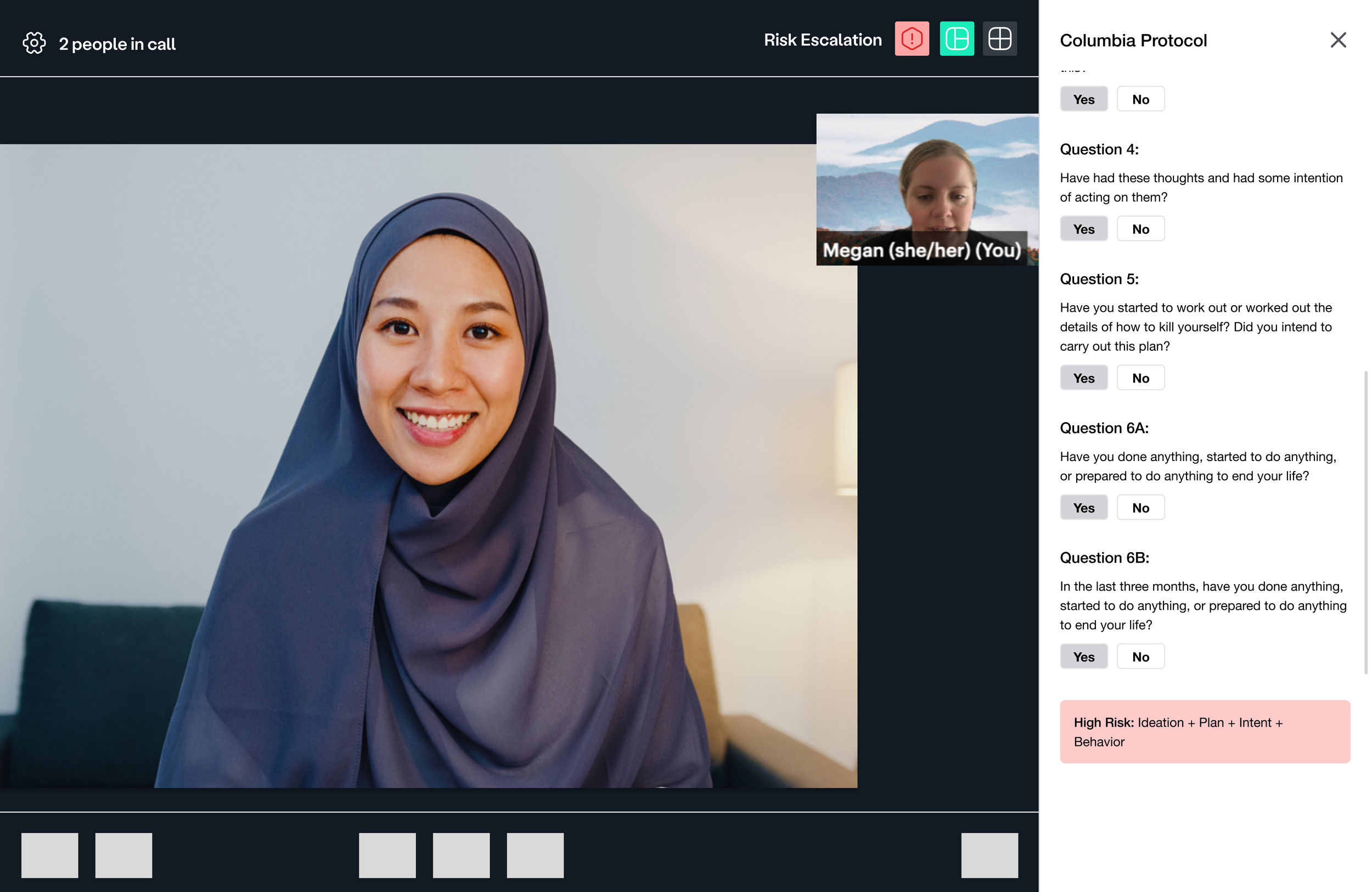
In-video Columbia protocol (safety + speed)
Integrated risk assessment directly into the session experience.
Removed the need for coaches to juggle multiple tabs + a manual spreadsheet mid-session.
Reduced operational friction in a high-stakes moment and supported consistency/compliance.
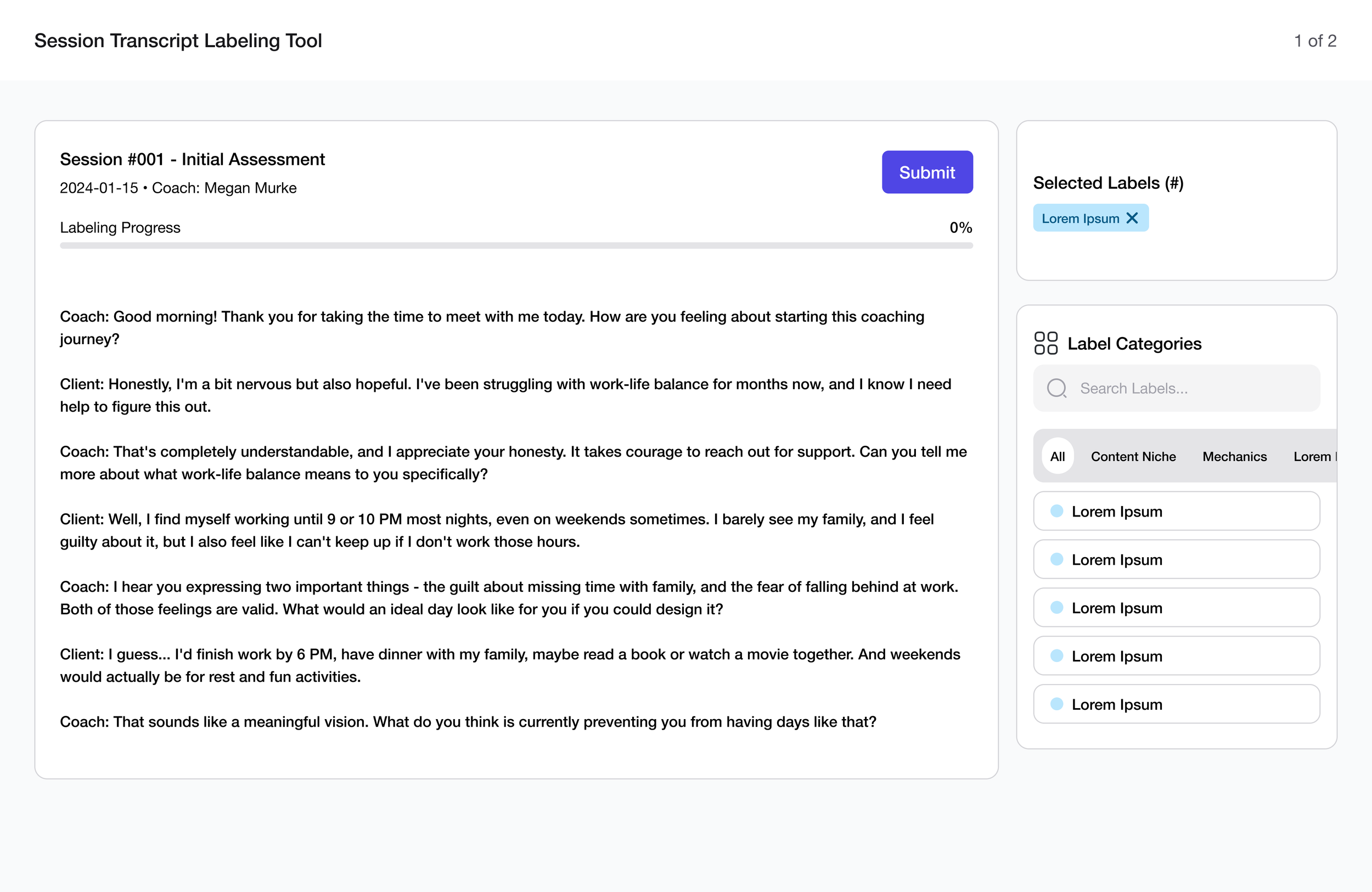
Transcript labeling portal (data infrastructure)
Designed a labeling tool for coaches to tag transcript segments by clinical categories/frameworks.
Converts expert judgment into structured training data so the model improves across:
detection (what’s happening)
recommendation (what to do)
triage (what matters now)
Why this matters
Efficiency: moved repetitive work from “coach brain + tabs” into summaries + suggested actions
Scalability: designed a reusable system pattern (digest + agent requests + labeling) instead of one-off features
Model flywheel: embedded human review so daily work improves model quality over time
Safety: treated risk workflows as first-class UX, not an external checklist