Increasing User Engagement through Interactive Self-Guided Tools
Role: UX Research, UX/UI Design, Design System Development
Objective: Increase weekly engagement in the self-guided experience by creating repeatable, actionable tools for emotional reflection and personal growth.
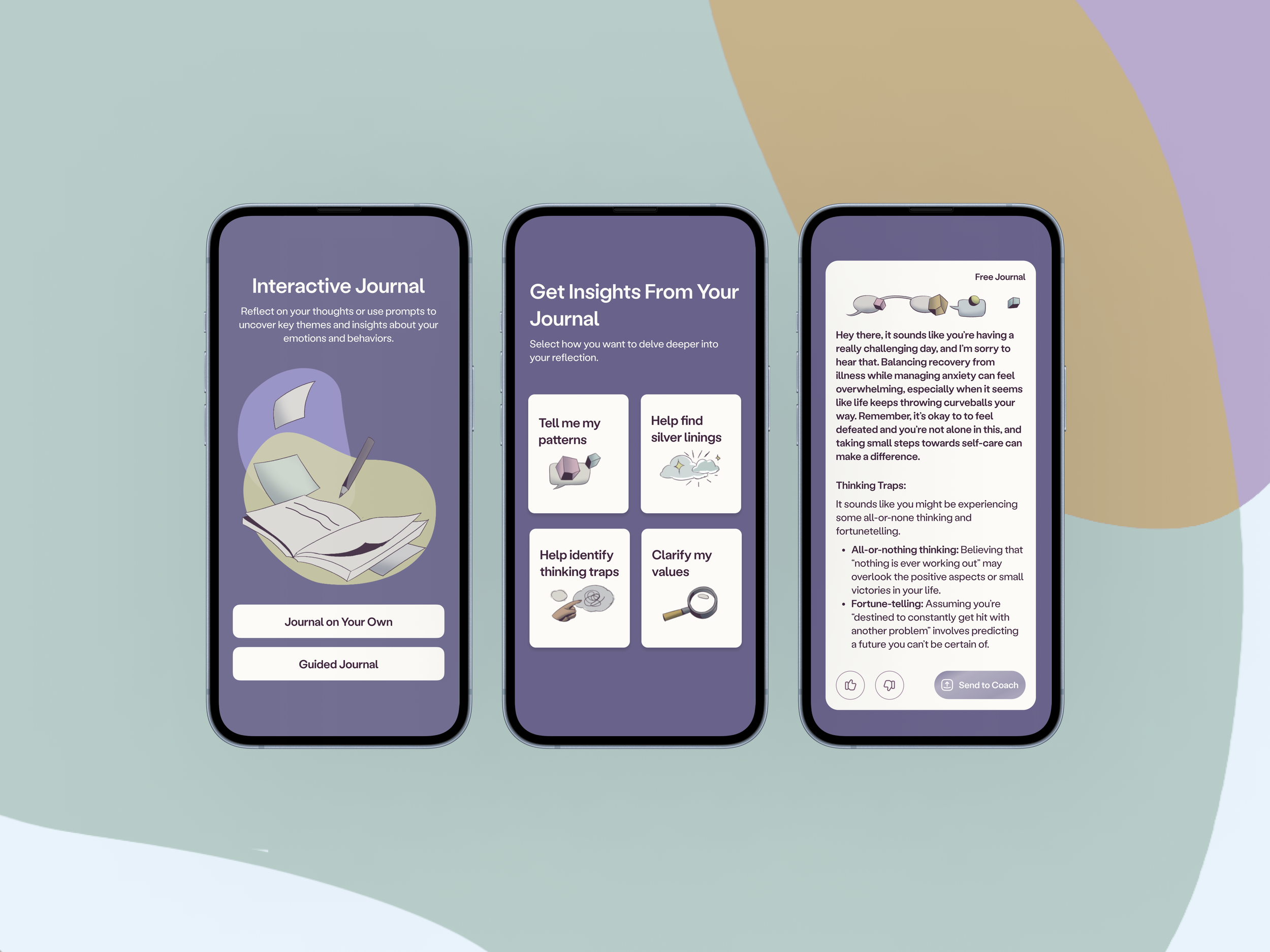
Solution: Designed an interactive “Reflect” tab with AI-driven journaling and analysis tools, providing personalized feedback that enhances user self-awareness and fosters consistent engagement.
Context
Wave Life is a mental health platform that offers an app and live video 1:1 coaching based on a transdiagnostic mental health model. It helps customers build emotional regulation skills with personalized content recommendations and affordable mental health coaching.
Analysis of user engagement revealed high interaction levels among coaching users, while self-guided users engaged less frequently. Our design objective was to increase weekly engagement for self-guided users with a repeatable feature that users want to come back to.
Problem Statement
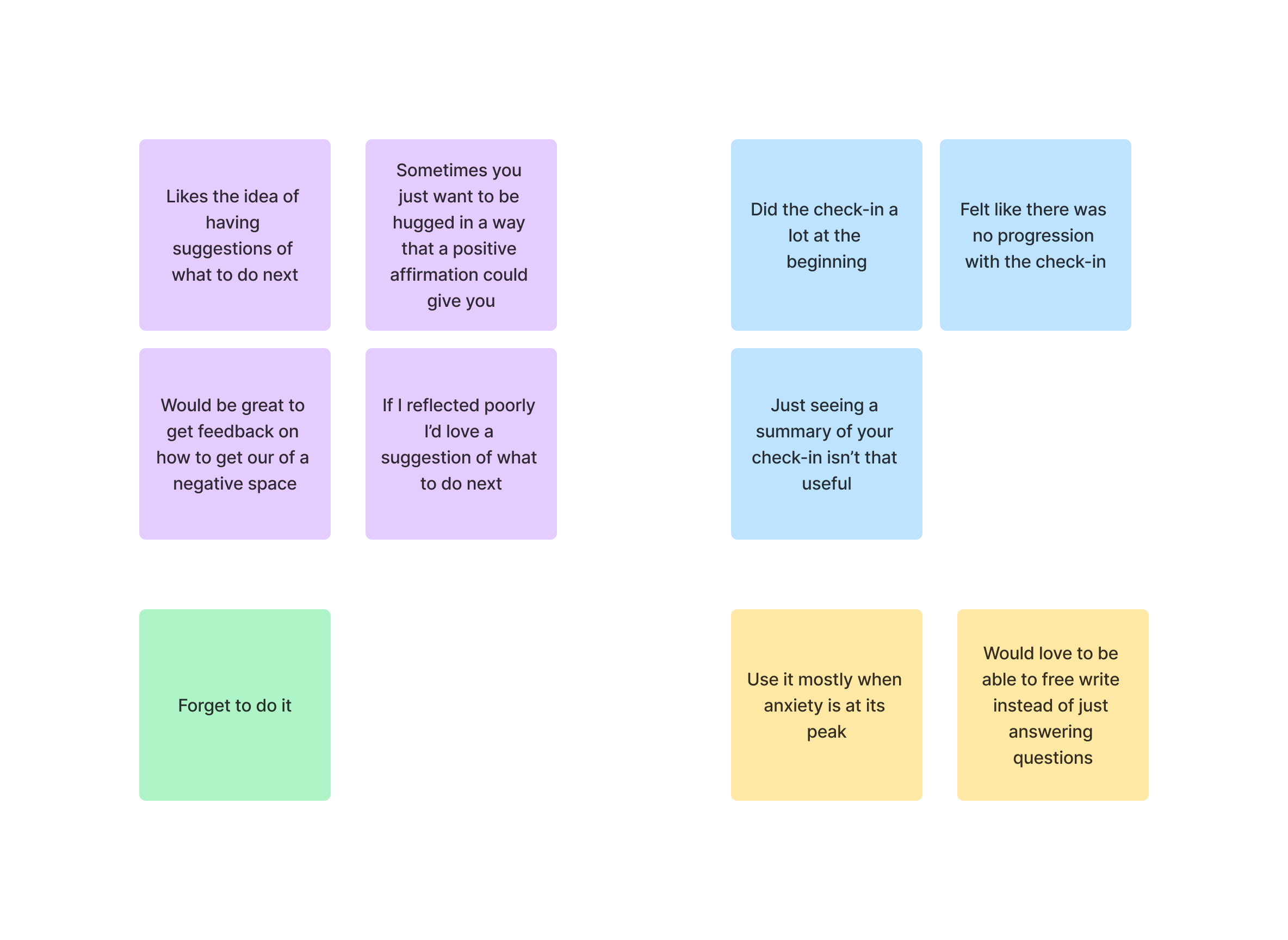
Our users highly valued the existing "check-in" feature but felt it lacked interactivity and actionable insights. Key user feedback indicated:
22% were unaware of the feature.
56% wanted actionable feedback beyond self-reflection.
33% stopped using it due to a lack of perceived progression.
Goal
Create a repeatable, engaging tool that provides valuable, interactive feedback, encouraging regular use and enhancing the sense of progression.
Research & Insights
Interviews and app behavior analysis confirmed that users appreciated emotional check-ins but desired richer interactivity and personalized feedback.
Key Findings:
Users wanted choices for freewriting or guided prompts.
They valued summaries that were empathetic and reflective.
Actionable insights and next steps enhanced the perception of progress.
Solution Design
I designed the “Reflect” tab to offer:
Freewriting or prompt-based journaling options.
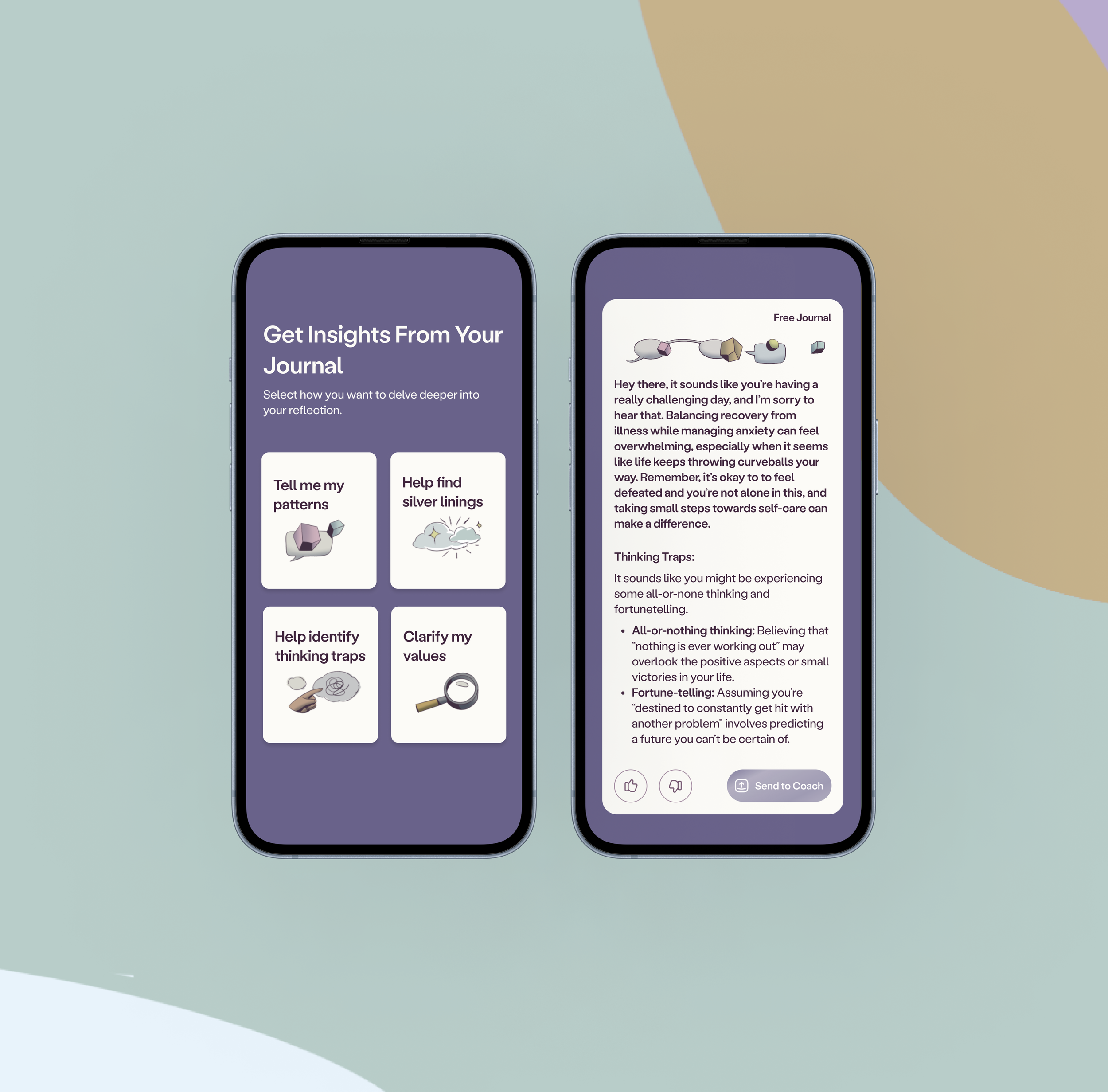
AI-generated summaries that synthesize user emotions empathetically.
Analysis tools like “Thinking Traps” to provide deeper insights and reflection questions.
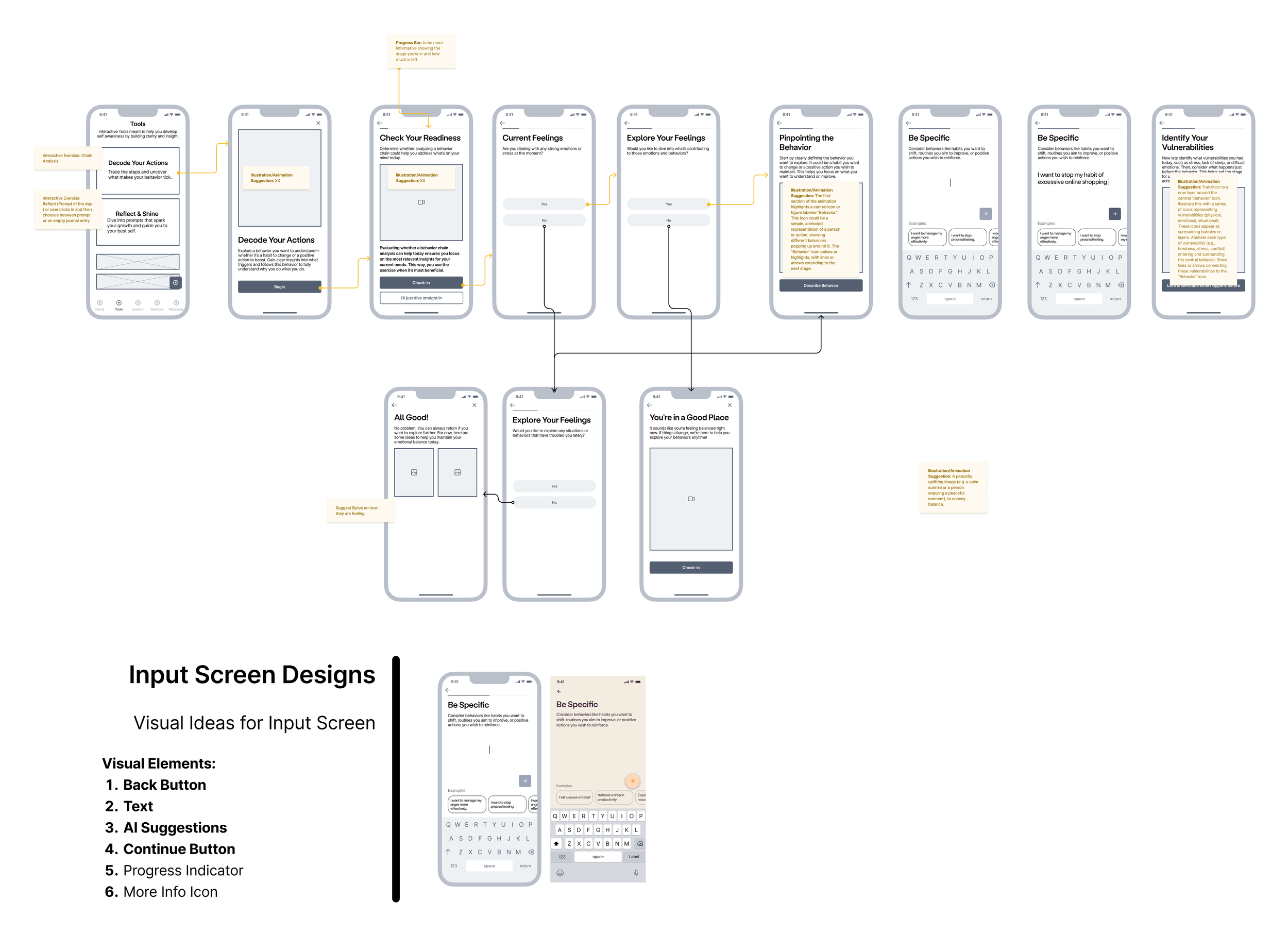
To support this feature and future expansion, I created a scalable design system that streamlined the development of additional self-guided tools, like “Chain Analysis.”
Testing & Iteration
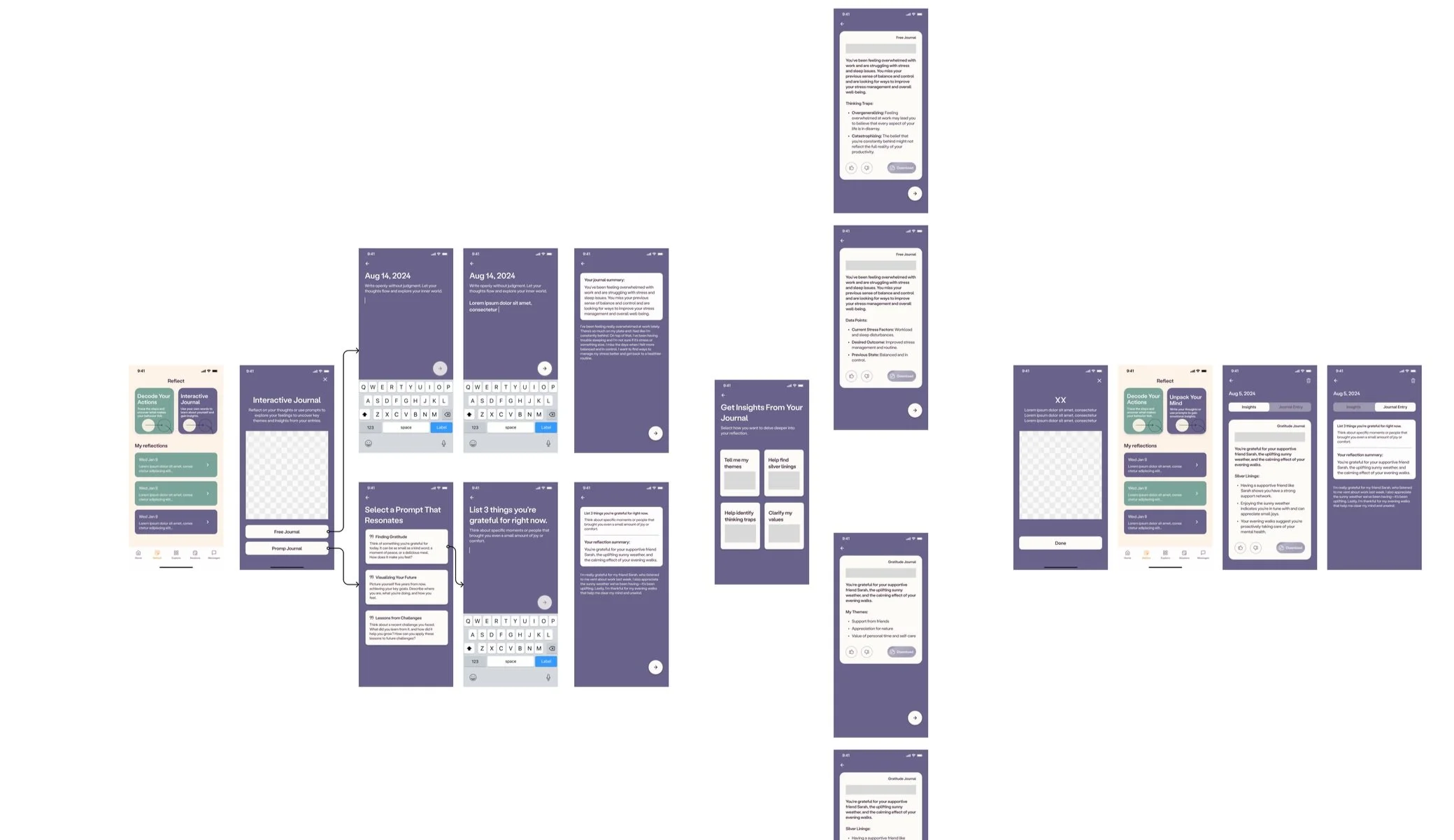
Prototype testing with superusers showed strong positive reactions. Users described the feature as a “sanity check” and a “lifeline” during stressful moments. We’ve released an MVP of the journal and have seen 25% boost in weekly visits.
Based on feedback, we are fine-tuning the AI responses and refining reflection questions to enhance tone and clarity before releasing the full feature.
This project highlights the power of user-centered design in translating complex emotional needs into simple, interactive solutions. The design system has since supported additional tools, adding consistent value to the user experience.