
Reducing No-Show Rates for First Coaching Sessions
Role: UX Research, UX/UI Design, Copywriting
Objective: Reduce no-show rates for initial coaching sessions by addressing user anxiety and enhancing engagement.
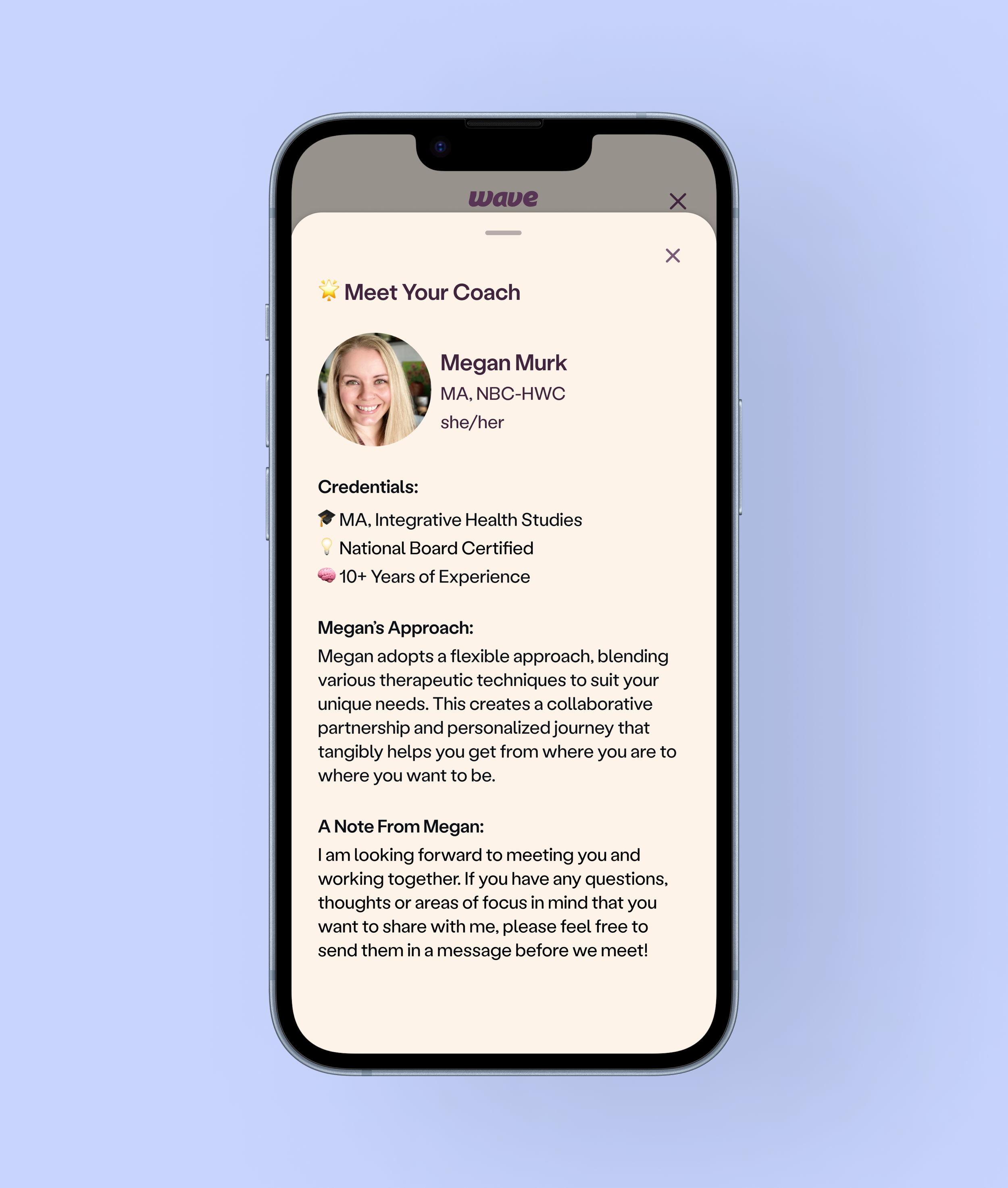
Solution: Implemented a coach introduction bottom sheet and personalized pre-session email, creating a stronger human connection and reducing no-shows.
Context
Wave Life is a mental health platform that offers an app and live video 1:1 coaching based on a transdiagnostic mental health model. It helps customers build emotional regulation skills with personalized content recommendations and affordable mental health coaching.
Problem Statement
Users were frequently missing their first scheduled coaching session, negatively impacting both operational efficiency and user satisfaction. Initial feedback pointed to visibility issues with the “Join Session” button, but deeper analysis suggested pre-session anxiety as a significant contributing factor.
Research & Insights
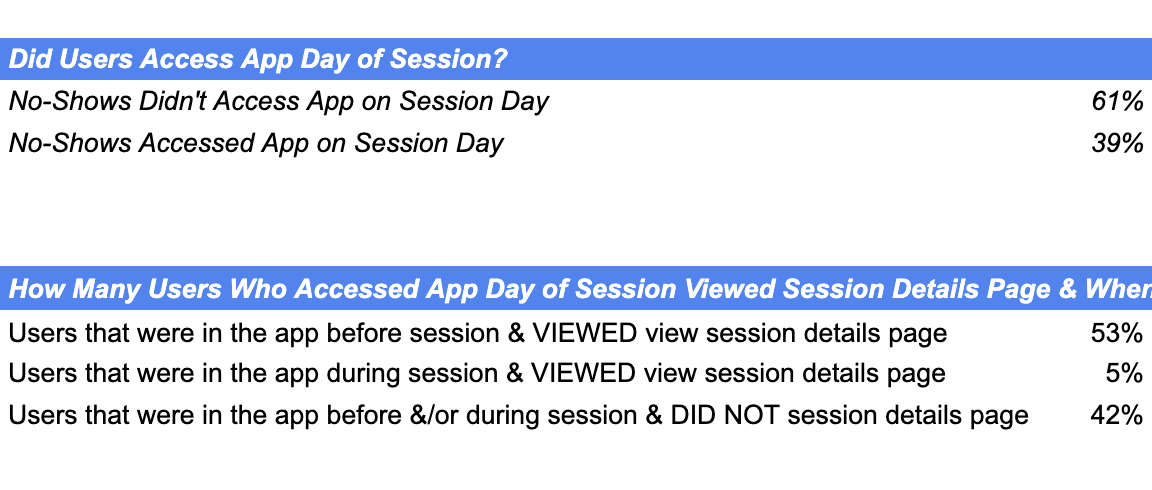
Data Analysis: Using Mode Reports, I analyzed app activity on the day of the session for users who missed their appointments.
Key Insight: 61% of users who missed their sessions didn’t open the app on the session day, indicating visibility wasn’t the primary issue.
Clinical Collaboration: Consultations with the clinical team revealed that new users might experience anxiety about meeting a coach for the first time without any prior introduction, a common friction point in therapy. Traditional therapy often uses consult calls or therapist bios to ease this transition.
Solution Design
Design Goals:
Reduce user anxiety by creating familiarity with the coach.
Maintain a low-friction scheduling and onboarding experience.
Solution Components:
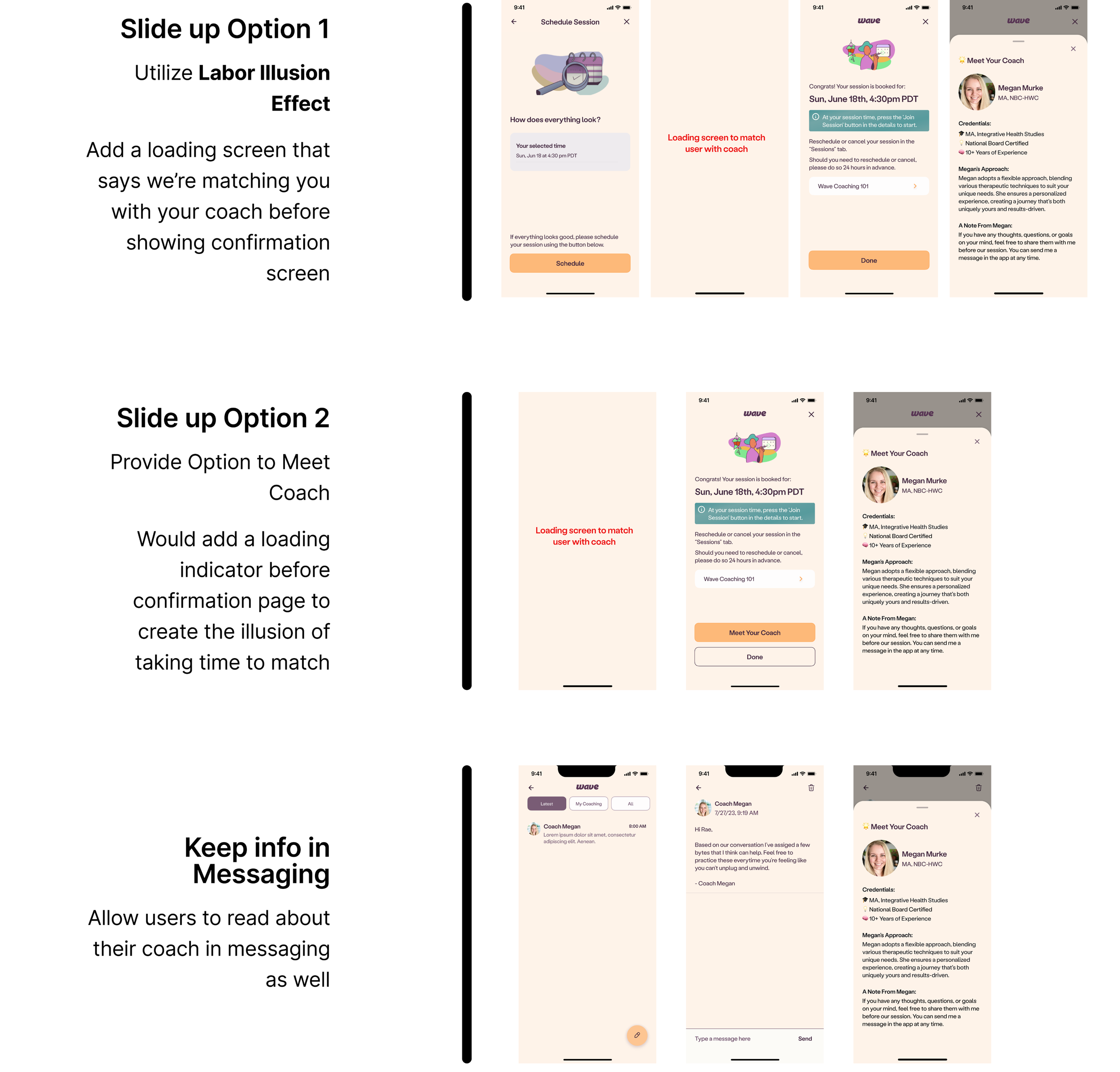
Coach Introduction Bottom Sheet: Immediately after booking, users see a bottom sheet featuring their coach’s photo and bio. This simple UI component enables users to create an early connection with their coach and mirrors the therapist introduction experience typical in in-person settings.
Pre-Session Introductory Email: Added a “Meet Your Coach” email, further reinforcing familiarity and preparing the user for their first session.
Design Process:
High-Fidelity Wireframes: Leveraging the comprehensive design system I developed (including components, visual design, and typography standards), I quickly generated high-fidelity wireframes to convey the exact user experience for the bottom sheet and email introduction. This design system allowed for a swift transition from ideation to detailed mockups, ensuring consistency with Wave’s brand and UI standards.
Cross-Functional Collaboration: Worked closely with engineering to ensure smooth integration of the bottom sheet and collaborated with the clinical team to ensure the messaging aligned with mental health best practices.
Outcomes
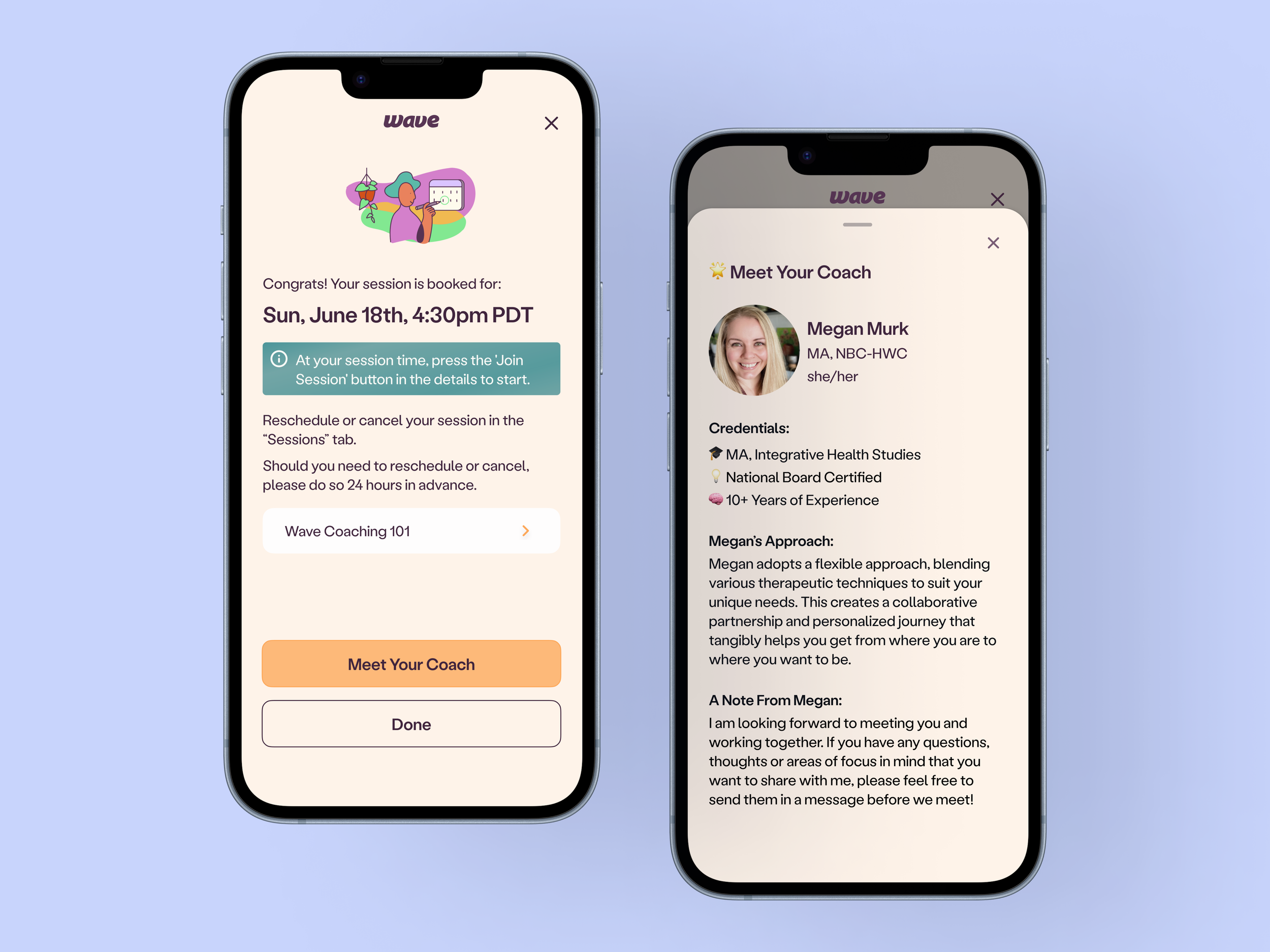
Quantitative Results: Significant reduction in no-show rates, now aligned with industry benchmarks.
Qualitative Feedback: Users would refrence bio materials in their session providing points of conversation for the first session.
Takeaways:
Data-Informed Decision Making: Leveraging data led to insights beyond UI, addressing deeper user needs.
Human-Centered Design: Focusing on empathy-driven UX design in sensitive areas like mental health can significantly enhance user engagement and trust.
Reflections & Future Improvements
Iteration Opportunities:
For the next phase, I’d explore adding a short video introduction from the coach, potentially increasing user engagement and comfort.
Reflection:
This project underscored the impact of small, empathy-driven UX interventions in reducing user anxiety and improving engagement. This approach can be adapted to solve similar challenges across industries.